
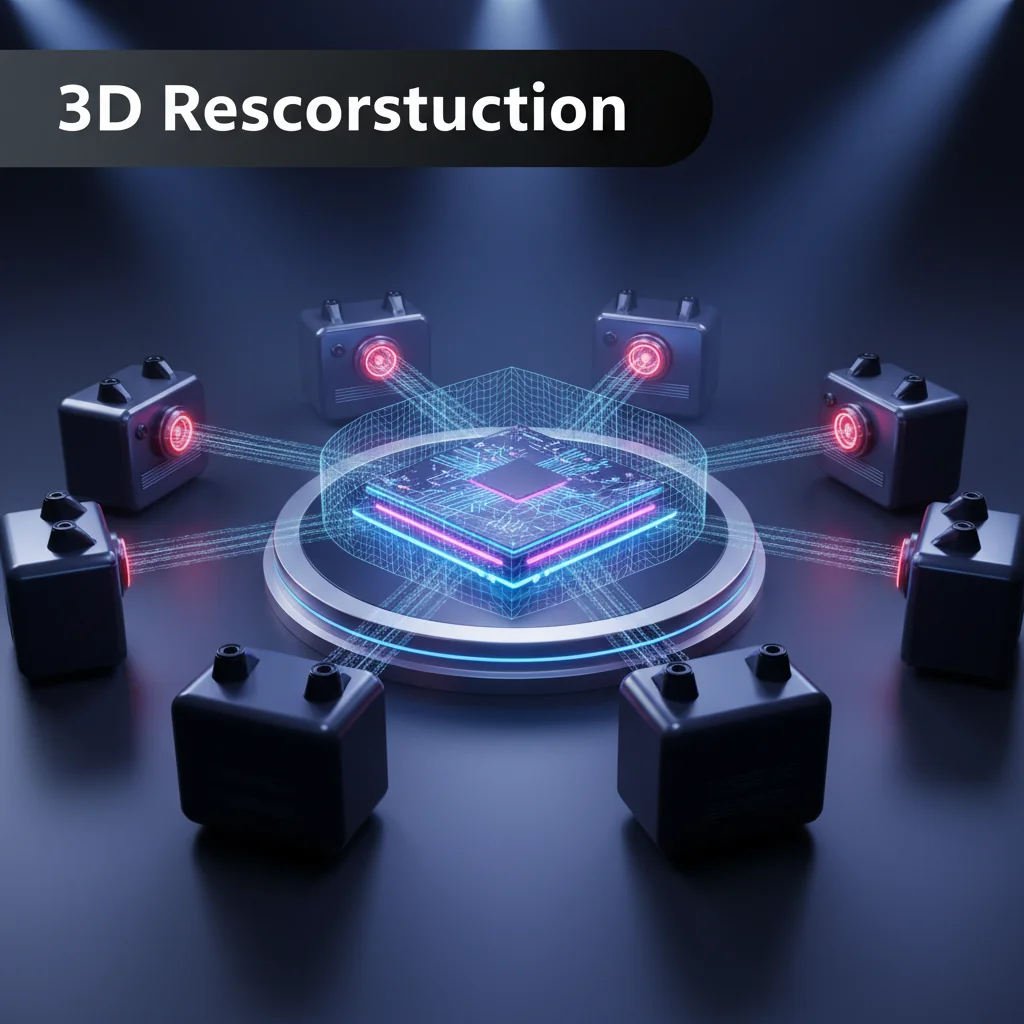
3D reconstruction pipelines for products
3D Vision teams often struggle with building reliable 3D capture workflows. The gap between a demo and a production system is usually in data coverage, evaluation discipline, and deployment ergonomics. This guide breaks the topic into clear steps you can apply immediately.
We focus on mapping, robotics, and 3D asset creation and use concepts like depth estimation and point clouds to keep outcomes reliable. The goal is to help intermediate practitioners build repeatable workflows with measurable results.
Why this matters
If you ship without consistent checks, performance drifts and costs climb. A few lightweight guardrails tied to depth error and reprojection error can keep quality steady while you iterate.
Key ideas
- Use depth estimation to keep outputs grounded in trusted sources.
- Treat multi-view geometry as a first-class design decision, not a last-minute patch.
- Define evaluation around depth error and reconstruction completeness instead of only vanity metrics.
- Standardize workflows with SLAM toolkits and depth sensors so teams move faster.
Workflow
- Clarify the target behavior and write a short spec tied to depth error.
- Collect a small golden set and baseline the current system performance.
- Implement point clouds and multi-view geometry changes that address the biggest failure modes.
- Run evaluations and track reprojection error alongside quality so you see tradeoffs early.
- Document decisions in mesh reconstruction and schedule a regular review cadence.
Common pitfalls
- Ignoring scale drift until late-stage testing.
- Letting occlusions creep in through unvetted data or prompts.
- Over-optimizing for a single metric and missing noisy depth.
Tools and artifacts
- Adopt SLAM toolkits to make experiments reproducible.
- Use depth sensors to keep artifacts and configs aligned.
- Track outcomes in mesh reconstruction for clear audits and handoffs.
Practical checklist
- Define success criteria with depth error and reconstruction completeness.
- Keep a small, realistic evaluation set that mirrors production.
- Review failure cases weekly and tag them by root cause.
- Log latency and cost regressions alongside quality changes.
- Ship with a rollback plan and a documented owner.
With a consistent process, 3D Vision work becomes predictable instead of chaotic. Start with a narrow scope, instrument outcomes, and expand only when the system is stable.
Related reading
- From 2D to 3D: depth estimation basics
- The Definitive Guide to Self-Reflective RAG (Self-RAG): Building “System 2” Thinking for AI
- Master Class: Fine-Tuning Microsoft’s Phi-3.5 MoE for Edge Devices
Author update
I will add dataset notes and training tips for real-world deployment. If you want a benchmark dataset covered, share it.